









The treatment of water, such as that done by the Grantsville Municipal Water plant, and delivery of water, is an intricate and involved process. From the moment water begins the journey from its source through a highly sophisticated plant, into underground pipes and to its final destination, professional scientists and plant operators oversee its passage, closely monitoring its movement. The water quality and testing is checked frequently.
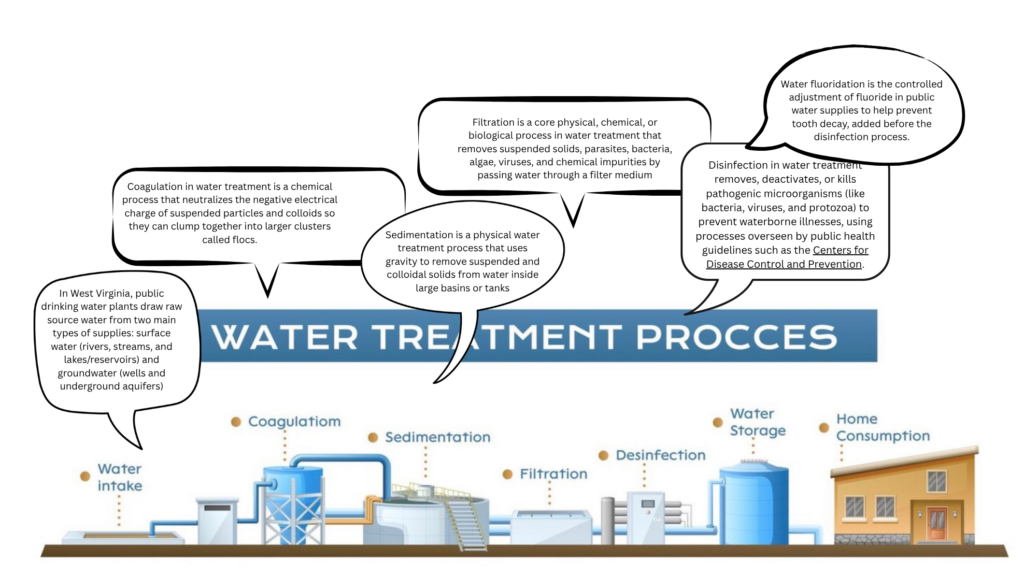
Throughout the year, scientists test water samples to protect against viruses, microbes, hazardous chemicals, algae, metals, minerals and other potential contaminants. From the time source water, which for our area is the Little Kanawha River, enters one of our treatment plants, until it flows through your tap, it goes through five basic treatment steps and the sent to storage units.
- Coagulation: Premier Pac 3030 chemicals are added to the water to form tiny, sticky particles called “floc,” which attracts dirt and other particles suspended in water.
- Sedimentation: The heavy floc particles settle to the bottom of treatment tanks, allowing for their separation from the water.
- Filtration: The water passes through filters of sand, gravel and charcoal to help remove even smaller particles.
- Floride added after filtration.
- Disinfection: Chlorine is added or other disinfection methods are used to kill bacteria or other microorganisms in the water.
- Storage: Water is placed in a closed tank or reservoir to allow for disinfection. Water then flows through pipes to homes and businesses throughout our community.
Due to the distance of treated water traveling to areas such as the southern end of Calhoun, operators in the Public Service Districts may find it necessary to add an additional boost of Chlorine. Another necessity in the treatment of water in the southern end of the county is to open a valve to allow water to pour out of the system and overturn the water. This is necessary because there are fewer customers at a greater span between homes, and too often the water sits too long in the line. This could allow the chlorine added by the Grantsville system to dissipate out of the water and allow contaminants to enter.
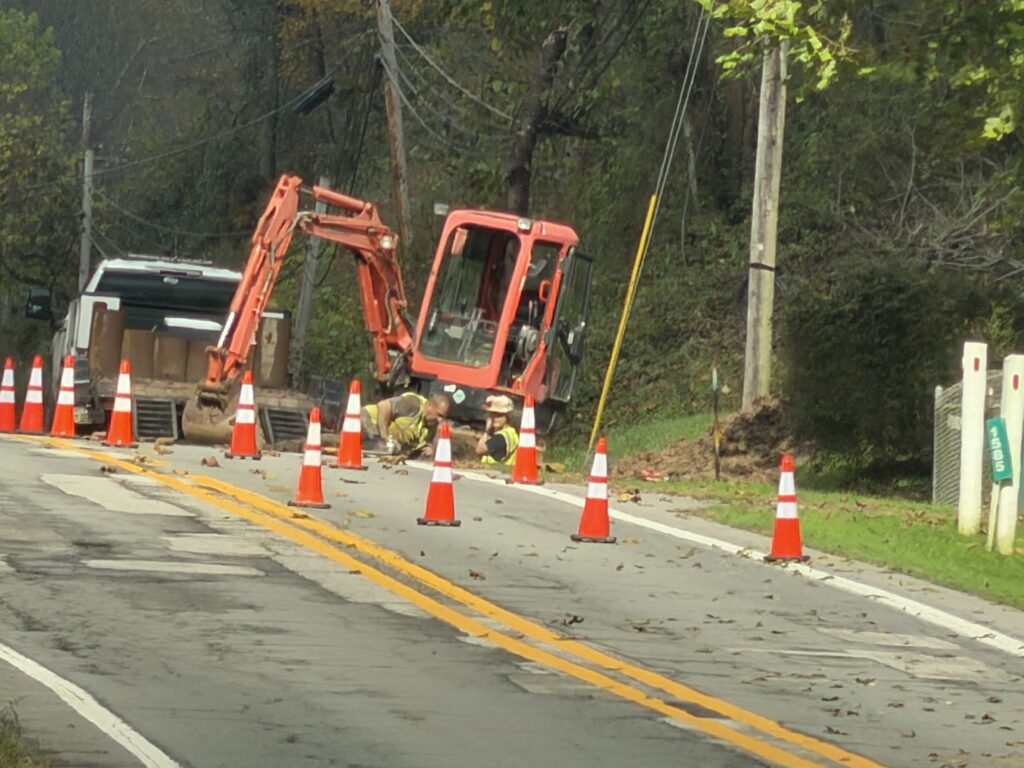
Mt. Zion PSD worked Friday to repair another leak on Route 16 at 1585 South Calhoun Highway. When a line breaks it is necessary to issue a boiled water advisory due to the possibility of contamination. The boiled water advisory usually lasts 72 hours to provide time to flush the line with fresh chlorinated water, have a sample drawn and sent to a state lab for evaluation, which takes 18-24 hours for the results to be returned to the water company who submitted the request. The boiled water advisory will be lifted upon the return of a negative bacteriological test.