












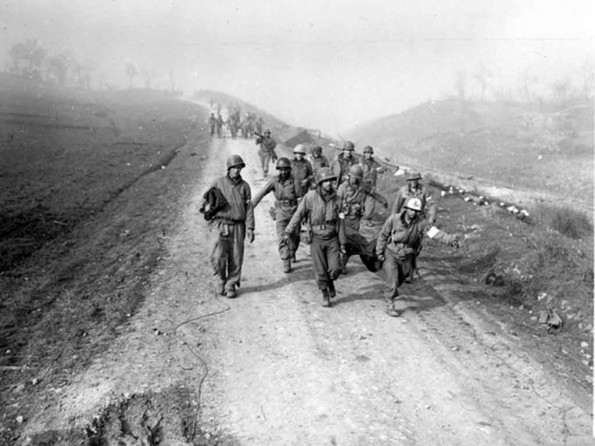
Featured image above is from the National Veterans Memorial Museum – Battle of Monte Cassino
Story and Photos from Rob Virden
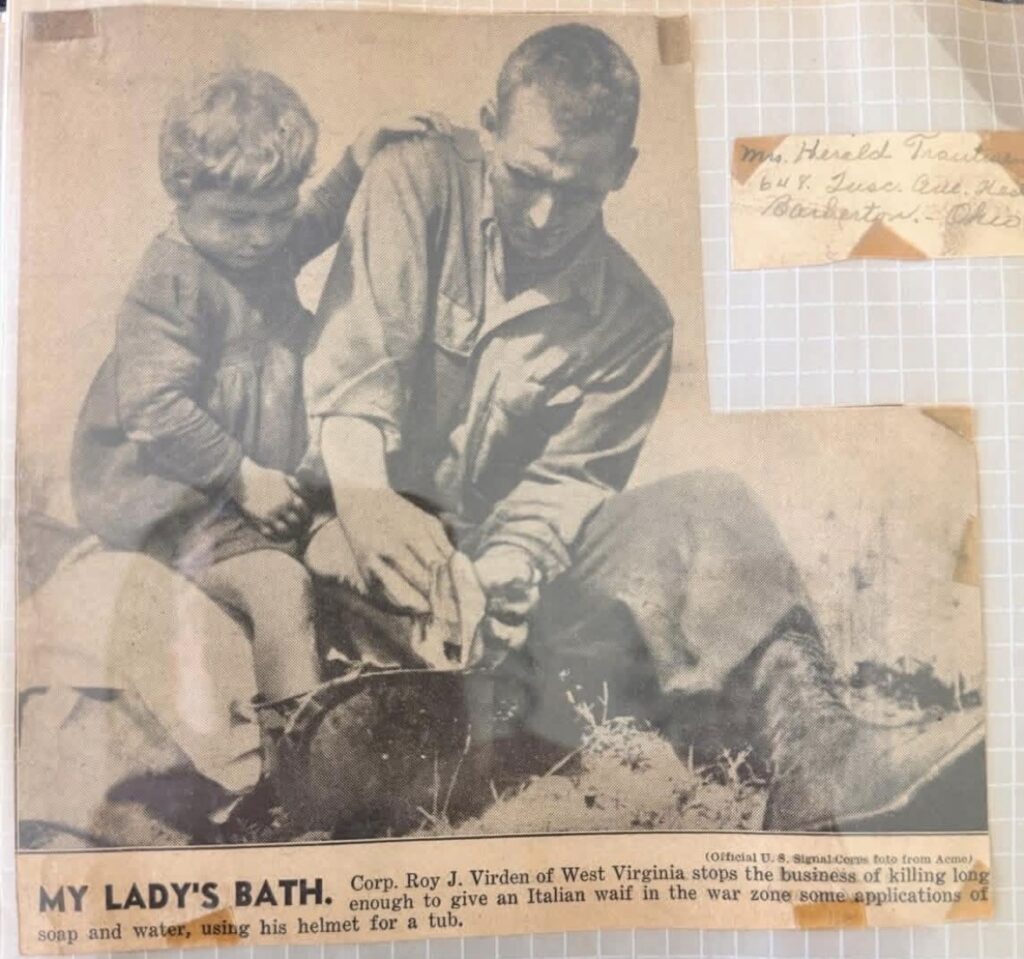
Roy Joseph Virden Jr. enlisted in the United States Army in July 1942 at Fort Hayes in Columbus, Ohio. Like thousands of young Americans answering the call to service during World War II, he left home for basic training at Fort McClellan, Alabama, where he completed fifteen weeks of boot camp.
Following training, Roy joined General George S. Patton’s Task Force A at A.P. Hill, Virginia. Soon afterward, he boarded a ship at Staten Island and sailed across the Atlantic for North Africa. His unit landed at Casablanca and moved on to Marrakech, where they provided security during the historic meeting between President Franklin D. Roosevelt and British Prime Minister Winston Churchill at the Casablanca Conference in January 1943.
From Morocco, the unit continued east through Algiers and into Tunisia. It was there that Roy experienced his first major combat. In February 1943, German Field Marshal Erwin Rommel launched a fierce counterattack through the Kasserine Pass. American forces, stretched thin and operating far beyond their supply lines, were driven back nearly 150 miles. For many young American soldiers, including Roy, it was a harsh introduction to war against experienced German troops.
After regrouping, Allied forces pushed forward once again. Roy’s unit fought near Mateur and on Jebel Achkel. Even after organized resistance in North Africa had officially ended in May 1943, some German formations, including troops associated with Hermann Göring’s forces, continued fighting for nearly two weeks before finally surrendering.
In July 1943, Roy crossed the Strait of Messina to participate in the invasion of Sicily. His unit landed near Gela and fought its way across the island toward Messina. British forces advanced from another direction, and together the Allies completed the conquest of Sicily, opening the door to the invasion of mainland Italy.
Following the campaign in Sicily, Roy’s unit assembled for operations on the Italian mainland. They moved north through Salerno and into Naples, which was liberated in October 1943. From there, they entered one of the longest and bloodiest campaigns of the war: the battle for Monte Cassino. Roy spent seven difficult months fighting in the rugged terrain around Cassino and the Rapido River. While some members of the unit participated in the landing at Anzio in January 1944, Roy remained with forces battling their way north through central Italy.
In May 1944, Allied troops broke through the German defenses at Cassino and advanced up the Liri Valley. Roy’s unit linked up with the forces that had been isolated at Anzio, and together they pushed toward Rome. On June 5, 1944, Roy and his fellow soldiers entered Rome. He proudly remembered being among the first Allied troops to enter the city.
The campaign did not end there. Roy continued north through Livorno (Leghorn), Pisa, and into the Po Valley as Allied forces steadily drove German armies toward final defeat in Italy. Later, elements of his unit participated in the Allied landing in southern France near Marseille, establishing a beachhead and waiting for advancing forces from northern Italy to join them.
By May 1945, the war in Europe was over. German forces in Italy surrendered on May 2, followed by Germany’s unconditional surrender on May 7. Victory in Europe Day was celebrated on May 8, ending years of combat across the continent.
After the war, Roy returned to Rome and boarded a ship bound for the United States. He arrived home before the war against Japan ended later that summer. Following the atomic bombings of Hiroshima and Nagasaki and Japan’s surrender in August 1945, World War II finally came to a close.
Before discharge, Roy spent time at several rehabilitation and transition centers designed to help returning soldiers adjust to civilian life. He spent a month at Fort Oglethorpe, Georgia, where he joked that much of his time was spent playing miniature golf. Additional rehabilitation assignments followed at Camp Custer, Michigan, and in Tennessee. Finally, on September 30, 1945, he was discharged from Fort Meade, Maryland. He had accumulated 110 discharge points, well above the 90 needed to return home.
Roy served with the 91st Cavalry Reconnaissance Battalion, a unit of roughly 900 men. Colonel Gandee commanded the battalion during much of its service, before Colonel Ellis assumed command prior to the Italian campaign.
Looking back, Roy often reflected on how young and inexperienced the American soldiers were compared to the seasoned German veterans they faced. Equipment was sometimes scarce or incomplete. Mortars arrived without proper sights. On one occasion, his patrol encountered seven German soldiers armed with machine guns. Roy’s group had only a jeep-mounted machine gun, but no ammunition. Startled, both groups quickly retreated in opposite directions.
Roy carried a .30-caliber machine gun and remembered the SCR-193 radio as one of the best pieces of equipment available during the war. The losses suffered by his unit were staggering. Of the 108 men in his company, only eight survived the war.
He recalled that Kister was the only soldier from his unit to receive both the Distinguished Service Cross and the Medal of Honor in their theater of operations.
Roy also took pride in his own advancement. After twenty-four months he had reached the rank of corporal. Reflecting on the rapid opportunities that wartime service created, he often remarked that he was only “three days away from making captain.”
Roy’s story is one of courage, hardship, and perseverance. From the deserts of North Africa to the mountains of Italy and the liberation of Rome, he served through some of the most difficult campaigns of World War II. Like so many of his generation, he answered his country’s call, endured extraordinary challenges, and returned home having helped secure victory in one of history’s greatest struggles.
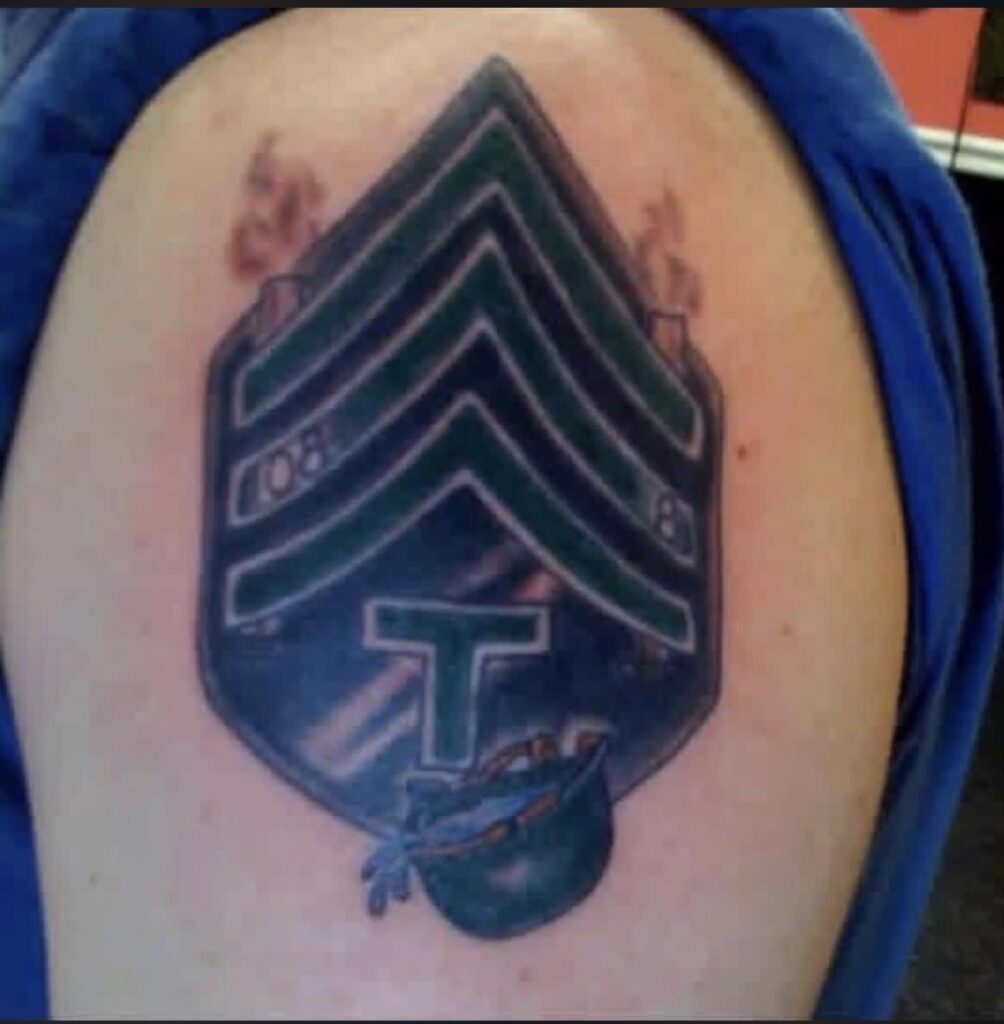
In 2009, son Rob Virden received the tattoo below as a tribute to his father, Joe.
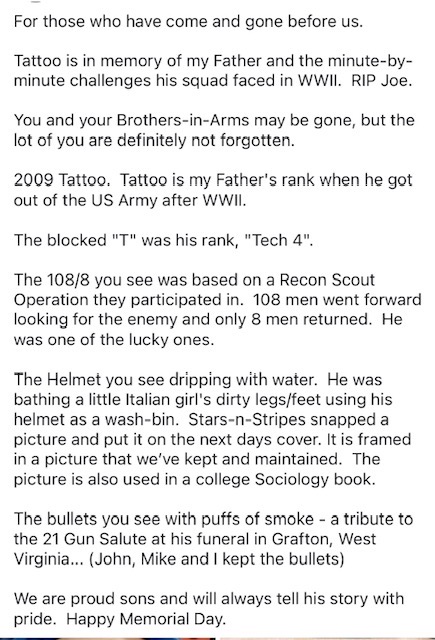
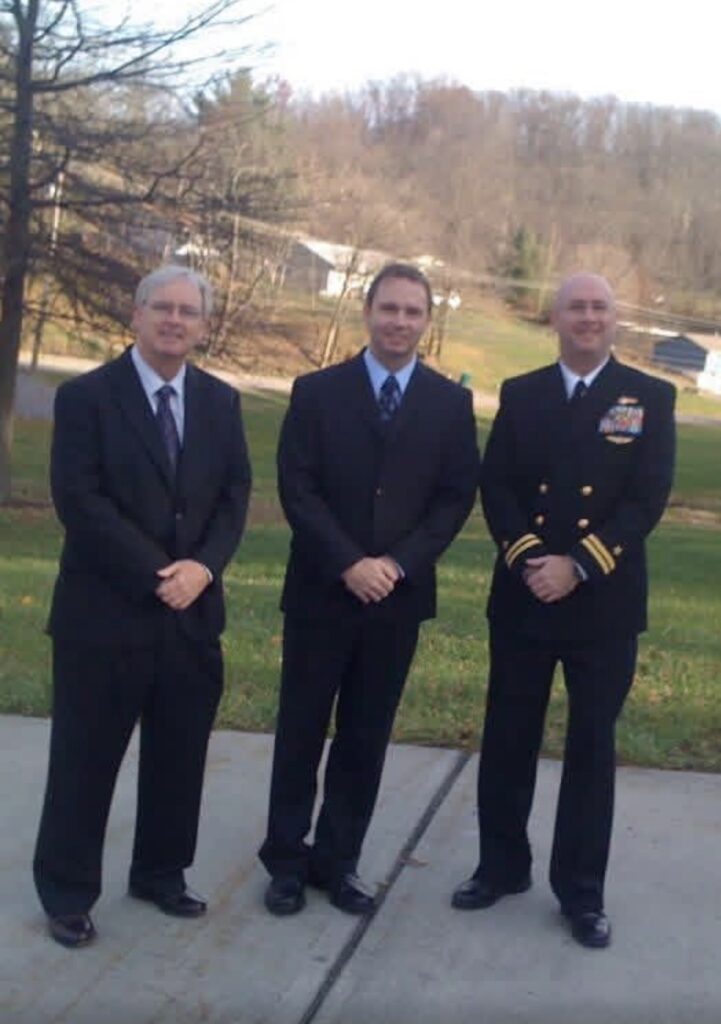
Sons, John, Mike and Rob Virden continued the legacy of serving their Country.
Roy J. Virden was a memorable character of my high school years who taught World History on the main floor of Calhoun County High School. I knew him as a painfully (yet comedic) honest man, who didn’t mince words as an instructor, but wasn’t above breaking faculty rules and sneaking his class down the hall in sight of the main office for an early lunch. A former coach who coached football with the locally famed and winning coach Wayne Underwood. I watched as he went up the steps into the coaches office at the left side gymnasium entrance, where he would skip the same step each time he entered the building. The step Wayne Underwood died on. His telling of that story effected me deeply as a young person. I had no idea as a child of the 70’s what a great man I was in the midst of. Thank you Rob for sharing this story with us. God bless the Virden boys… and all our American heroes.
Shari Johnson, Publisher