






Lawmakers say they are in the dark about why families can’t access a school clothing allowance program yet

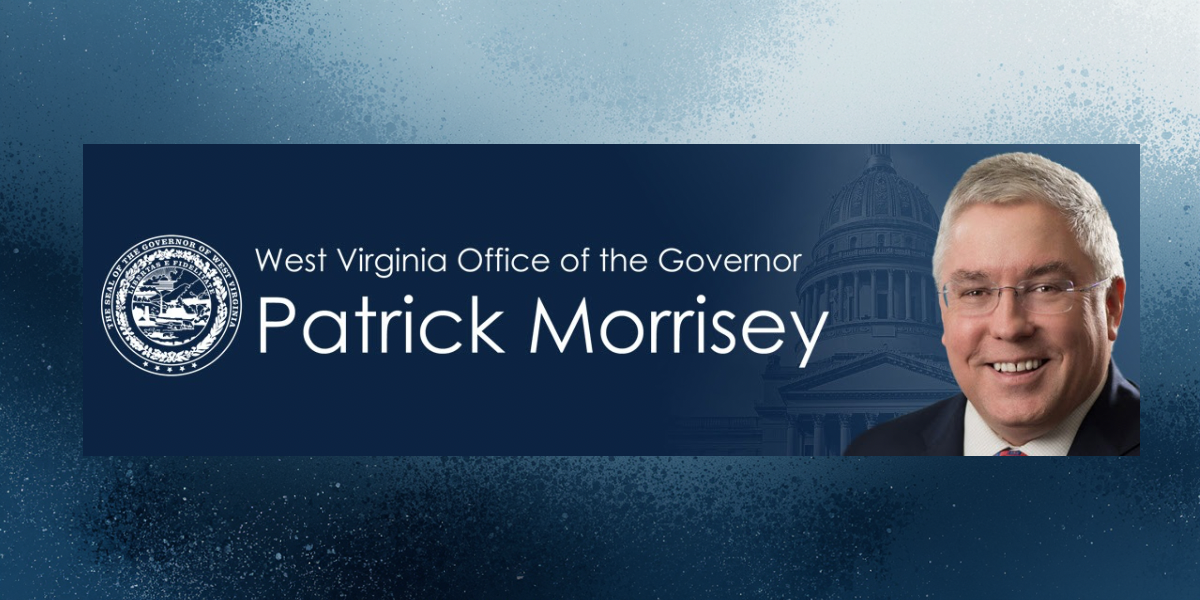
Gov. Patrick Morrisey speaks at a news conference about potentially using federal anti-poverty dollars to fund a private education initiative on Tuesday, Jan. 6, 2026 in Charleston, West Virginia. (Photo courtesy of the West Virginia Office of Gov. Patrick Morrisey)
The same day Gov. Patrick Morrisey touted a $370 million revenue surplus, a program that provides school clothes to low-income students didn’t kick off as expected. Morrisey said the program is under a funding review, but hasn’t provided many details about whether families will receive the assistance before school starts next month.

“What’s a priority for him?” asked Del. Elliot Pritt, R-Fayette. “Is it important for poor kids to have new clothes when they go to school? That’s the only question that needs asked right now.”
The clothing voucher program is available for West Virginia families living near or below the poverty line. Eligible families typically access these vouchers on July 1 to shop for shirts, pants, shoes, coats and more before school starts.
Annually, over 80,000 children statewide have used the clothing allowance.
Redia Rowe has relied on the clothing voucher to buy new clothes and socks for her teenage granddaughters, whom she raises, while living on a fixed income.
“I was going to use it,” said Rowe, 58, who lives in the town of Wayne, West Virginia. “Personally, I know there are so many people — so many children — going to struggle through this.”
Del. Evan Worrell, a member of House leadership, said in a phone interview that he was frustrated and disappointed by the situation.
“There is no reason for the clothing voucher program to not go on as usual,” said Worrell, R-Cabell. “I’m disappointed because I don’t know why, and I don’t have the answer as to why it is being delayed.”
He continued, “I think it’s a bad look … announcing a $370 million surplus on the same day that we’re no longer providing or have yet to provide clothing vouchers for needy families for the upcoming school year, so it’s just not good optics.”
Morrisey said in a July 1 news release that, “West Virginia concluded fiscal year 2026 with a strong financial performance,” and outperformed initial state estimates by $370 million, or 7%.
There is no reason for the clothing voucher program to not go on as usual.
– Del. Evan Worrell, R-Cabell
“Because of our significant surplus, we will fund every obligation in the back of the budget, including $125 million for roads and infrastructure, fully fund the Hope Scholarship and other important priorities,” he said.
The clothing voucher program is funded through federal Temporary Assistance for Needy Families dollars. Morrisey announced in May that TANF faces a $40 million structural deficit due to increased COVID-era spending by the Department of Human Services.
Lars Dalseide, the governor’s communications director, said that, “For too long, bureaucrats and big-spending politicians relied on one-time revenue to pay for permanent programs.”
“That happened a lot during COVID, which means the leaders who came after the COVID hangover have to fix the overreliance on one-time money,” Dalseide said in an email. “In consultation with the Legislature, the governor is committed to funding an appropriate clothing allowance and other TANF programs in a sustainable manner. We must be honest with the public and develop permanent solutions instead of relying on gimmicks and crisis-era spending levels.”
Lawmakers say there is no reason for any TANF-funded program to be paused at this point after they already approved $177 million in TANF funding for DoHS to spend this fiscal year.
Other funds at the governor’s discretion could be used to fund the clothing voucher program if TANF funding was in jeopardy.

“(Morrisey) can very well have a stop gap to do some things, and then we can just move monies around to reimburse his fund, but it’s wildly important to make sure that we’re doing this,” said House Minority Leader Sean Hornbuckle, D-Cabell. “I’m hoping that we can figure something out to help these kids.”
Pritt emphasized that the state “has the money for all of these things.”
“We have the money for a giant Ferris wheel, and I think it’s awesome that we celebrated America’s 250th birthday, but we also have money to get poor kids clothes for school,” he said.
A public school teacher, Pritt said clothes purchased through the voucher program can be a student’s clothes and coat for the entire school year. “It’s invaluable,” he said.
Jessica Huggins, a stay-at-home mother of two in Wheeling was counting on the clothing voucher to help her purchase clothes for her five-year-old son, who starts kindergarten next month.
I have been checking the website and social media to see if there’s been any updates,” said Huggins, 34. “If the funds don’t get released, I’m going to have to figure out what places are available or resources are available that might help us get some school clothes for him … It’s going to be really hard.”

There’s no information that’s been given out’
Department of Human Services leadership told lawmakers at the start of the year that the department had two to three years of surplus TANF funding remaining.
In May, after lawmakers had already signed off on the governor’s requested TANF amount, Morrisey announced the funding shortfall could impact programs that support foster children and needy families.
“I left session feeling like we had done a really good job,” said Worrell, who serves on the House Finance Committee. “Overall, the budget was completed and done in an accurate manner. So then to walk away less than two months after that session, where we worked so hard for 60 days to get that budget done, to be told, ‘Oh, well, hold on, there’s the $42 million structural deficit in TANF,’ that never came up.”

Sen. Ryan Weld, R-Brooke, said, “A key attribute of successful leadership is communication … and unfortunately we have not seen that from this administration.”
“There’s no information that’s been given out,” Weld said. “You did happen to hear that the state has $370 million surplus, but you didn’t hear anything about the program that you’re going to use to buy your children clothes as they head back to school in about a month and a half. So, a lack of communication is frustrating for legislators. It has real world implications for the people who utilize these programs.”
The Morrisey administration hasn’t produced documentation to lawmakers with details about TANF spending, according to multiple elected officials.
“I have yet to receive any information from DoHS on the TANF spending,” said Worrell, who stressed he wants to work collaboratively with the governor and state agencies.
“It feels as though it’s still adversarial, and I don’t understand why,” Worrell said. “All we’re asking for is documentation that should be public and readily available. I’m a public servant, the governor’s a public servant. It is our job to be transparent to the people, and that includes any and all spending of taxpayer dollars.”
Weld said, “We are going to have to find ways in the future to hold the executive branch more accountable when, on their own, decisions are made with zero communication and in contra to appropriated money.”
Hornbuckle said that the state’s financial status may not be as good as touted.
“I don’t know if there’s other things that they’re waiting on for the shoe to drop, and they’re going to have to shift all that surplus to other essentials in the state to keep it afloat,” he said, adding that House Democrats would be willing to return for a special session to make sure the clothing voucher program continues.
The Legislative Action Team for Children and Families, which brings together more than 20 organizations working on behalf of children and families in West Virginia, has called on Morrisey to immediately release funds for the school clothing allowance program and accept applications.
“Families need help, not hurdles. The administration’s delay in launching the School Clothing Allowance program is creating needless uncertainty for families across West Virginia. We are growing concerned that it is part of a troubling broader effort from the administration to reduce or eliminate programs that serve vulnerable children and families,” said Jim McKay, chair of the Legislative Action Team and state director of Prevent Child Abuse WV.