







Incorporated in May 2023, the West Virginia First Foundation (WVFF) is responsible for distributing 72.5% of the state’s opioid settlement funds from the Qualified Settlement Fund (QSF). The remaining funds are allocated from the QSF as follows: 24.5% to Local Governments and 3% to the Office of the West Virginia Attorney General. The funds allocated from the QSF to the Local Governments and Attorney General do not pass through WVFF and are not listed in this report.
Each Local Government was responsible for submitting their annual financial report to the Foundation by April 30, 2025. This regional summary incorporates all such submissions and was compiled within the thirty-day window outlined in the MOU. The report includes:
● The total amount of Opioid Funds received directly by Local Governments in the Region
● A breakdown of how those funds were spent, categorized by Approved Uses
● Award recipient details, including amounts, descriptions of use, and disbursement terms
● Impact information highlighting measurable outcomes and community benefit
The full report can be viewed here.
Below are two screen shots showing the amounts received and expended in Calhoun County. The amount expended for this report show $0. Which is also seems to be the case on the majority of the cities that received money, although I did not go through the entire 327 page document.
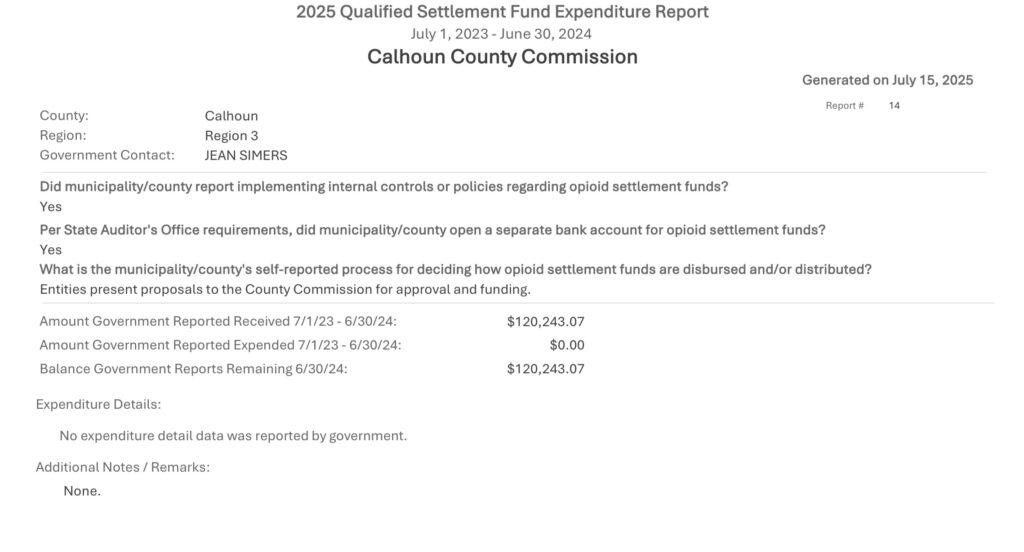
Ridgeview contacted County Clerk Jean Simers in question of why money that appeared to have been received in 2023 had not been listed as at least partially spent within the fiscal year of 2023 and 2024. The funding was not however received until the last month of that fiscal year, not allowing time for many, if any expenditures for Calhoun.
Since that time in the 2024/2025 fiscal year Calhoun County has spent nearly $60,000, with around $20,000 given to Calhoun Family Resource Network and nearly $40,000 to Minnie Hamilton for the purchase of equipment. Those detailed expenditures will be on the 2026 Report.
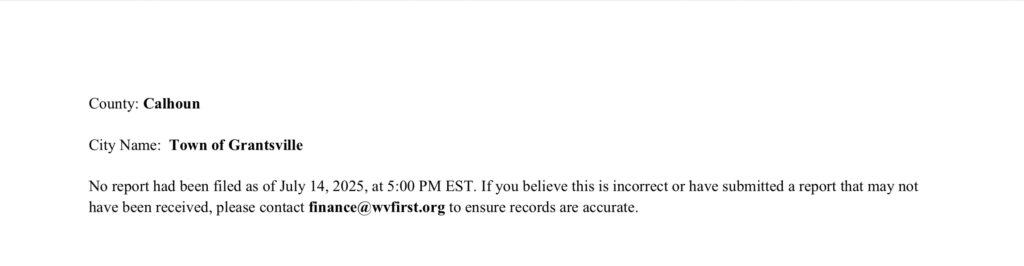
This would have been the responsibility of the previous administration, but currently will be on the new administration’s to do list.
It was interesting to go through the expenditures of other communities who listed how their funding had been used and distributed throughout their community to reduce drug use.